Showing posts with label Cross River Tram. Show all posts

Tuesday, 28 April 2009

Cross River Tram is dead. Crossrail might die. Long live the tube?

I made reference, yesterday, to the fact that Lambeth Council had mentioned the Cross River Tram in their Local Development Framework. I think, perhaps, that they forgot to remove it from the document because I doubt (sadly) that the scheme will ever come to fruition.

Today though, I spotted a rather interesting article article in the Evening Standard. The writer, Simon Jenkins, suggests that Boris should kill off Crossrail. Unfortunately, due to the nature of the "limited pot" (now "empty pot") of public money, one always knows that some Londoners will benefit through certain initiatives whilst others won't benefit at all (or will even become worse off). The Crossrail project is one example of a piece of transport that doesn't benefit South London at all. Due to my love of all things public transport, I'm not in a position to oppose it, but Simon's article has made me wonder... Apparently, TfL are close to bankruptcy, and unlikely to stump up their share of cash for Crossrail. If Boris were to eradicate the Crossrail project to plug the hole in his transport budget, Simon wonders whether he'd choose to plough that money into the tube.

The spare money in the pot from ditching Crossrail would be £5.6 billion.

And it was only the other day, (reported in Southwark News here) in early March at the London Assembly that Boris suggested "the potential of extending the Bakerloo Line for instance... is something we should drag onto the agenda". Do we think that any of the spare £5.6 billion could be channelled towards improving the tube connections in South London? It would be great to connect Camberwell, Peckham, Lewisham, Croydon and Brixton. How much does it cost to add tube stations and extend the lines? It certainly wouldn't cost that much to re-open Camberwell tube since the infrastructure is in already.

That would be a project which would mean South Londoners could stop asking "What has Boris ever done for us?"

Monday, 27 April 2009

Local Development Framework - Draft Core Strategy [Section 8]

About two weeks ago, I started to summarise Lambeth council's draft "Core Strategy", sections 1 & 2, and then 5, 6 & 7. Today I'm posting the final installment (section 8) . (The other sections are either references or dull/repetitive).

The core document is the most important document contained in the "Local Development Framework". The entire document is 116 pages long. These three posts are a cut-down version, mostly just summarising what was written. I've not changed their wording much, but have shortened and simplified because it contains some interesting ideas for the Borough.

I've used the Lambeth Council document headings where possible, but have not summarised every section as it's a highly repetitive document. The terms in purple are the "key" definitions.

The insightful comments in red are my comments. Due to length of the document, I've split my summaries into separate blog posts.

SE11 readers might like to focus on the "Vauxhall" and "Oval" elements of Section 8 in this post because they are the most pertinent to the area. However, anybody seriously interested in the plans for Vauxhall should dig out the Vauxhall area Draft Supplementary Planning Document:

Section 8 – Policies for Places and Neighbourhoods

The document breaks the Borough into nine different parts, and whilst not intended to cover every part (p58), do attempt to reflect aspirations. [I think these are the most interesting parts… One gets a better picture of what might happen when the Borough is broken down into small sections.]

Waterloo (p59):

The London Plan identifies the potential for 15k new jobs in the area. There is an existing population of 5k people, with potential for additional 1500 dwellings by 2016. The heart of Waterloo is dominated by railway infrastructure and the IMAX roundabout/viaduct and Road constitute a confusing, traffic dominated environment, but there are opportunities for improvement, including Waterloo City Square project, which aims to retain provision for buses (and potentially any Cross-River tram proposal) [they are joking, I presume! It is interesting that the Lambeth LDF continues to mention the tram. I’m not sure if they forgot to take it out, or whether this is deliberate.] There are other initiatives – TFL’s “Legible London” related to pedestrians, and South Bank Centre’s plan re. pedestrian movement.

Waterloo Station (p60) may present a major development opportunity arising from need to remodel facilities to increase capacity.

There are two large hotels in the area, and permission has been granted for 3 more. There are significant health and education uses too. King’s College has plans to expand its presence at Waterloo.

Policy for Waterloo (p61):

Waterloo will be developed by supporting sustainable development for jobs and homes. Waterloo station and immediately adjoining areas has been identified as providing potential for loose cluster of tall buildings. Arts and cultural expansion will be supported. Transport capacity at Waterloo Station and better linkage to Lower Marsh could prove possible. Use of Hungerford car park as extension to Jubilee Gardens will be promoted.

Vauxhall (p63):

Vauxhall part of London Plan priority Areas for Regeneration, which includes Vauxhall/Nine Elms/Battersea. The vision is a place of growth with a heart that will be a good environment for pedestrians and cyclists. Vauxhall is known for its gay community, Portugese community and night life. Vauxhall City Farm is important. The bus station, MI6 and St George’s Wharf are now local landmarks. A series of sites, adjoining Nine Elms and Battersea present opportunities, but public transport capacity is limited and planned upgrades to Vauxhall underground will be absorbed by current demand.

Policy for Vauxhall (p64):

The Council will support mixed use development at Vauxhall (housing, retail, leisure, commercial etc.) and development can provide at least 3500 new homes and 8000 new jobs by 2026. The borough will support the development of an accessible pedestrian and cycling environment with public art and linkages to the River. There will be a seeking of improvements to public transport and highway, particularly seeking the removal of the one way traffic system. [Did I read that correctly? What on earth do they want to do to the main road? I thought the one way traffic system was comparatively new! This development needs to be carefully observed.] Along the river, Lambeth are anxious to avoid creating a wall effect, blocking out the Thames and want sufficient gaps between buildings. Spring Gardens and Pedler’s Park are to be improved to create high quality public green space.

Brixton (p67):

Brixton is a major town centre, famous for markets and significance to London’s African and Caribbean communities. Much of it is in a conservation area and its character is creative and diverse. It has a large leisure centre which is a community focus, but also has the highest levels of deprivation in the Borough. Brixton is part of the London Plan priority Areas for regeneration. Brixton has a high number of retail units, many of which cater for specialist African and Caribbean goods. Vacant units in 2008 was around 11%, comparable to the national average. Due to development at Battersea and Elephant, Brixton requires a strategy to survive. Commuters must be encouraged to spend when passing through.

Brixton underground is undergoing work to increase capacity by 14% and will benefit by the phase 2 extension of the East London line. A new public space will be created at Brixton Central Square by amalgamating Tate Gardens and Windrush Square. The new Evelyn Grace Academy will move to permanent place on Shakespeare Road in 2010, providing 1100 secondary school places, and a Play Park will be developed at Max Roach Park.

Brixton’s strengths are its independent shops, markets and creative businesses and key objectives for regeneration in Brixton are the reinvigoration of the town centre as a shopping destination, growth as a centre for creative/cultural industries and promotion of self-sustaining communities.

Policy for Brixton (p69):

Brixton market will be supported through physical and other improvements and arts, creative and cultural industries will be expanded. The town’s popularity for leisure and nightlife will be expanded, and provision for a theatre will be supported. A new Exchange Square will be supported, linked to a new station entrance, revitalised railway arches and retail/residential development on the Popes Road car park. High Street re-invigoration can be supported. Acre Lane will have employment opportunities protected. Train station could receive improved access and public realm should be improved.

Streatham (p71):

Streatham is one of Lambeth’s major town centres (as well as Brixton) and the High Road is a defining feature, being one of the longest high roads in Europe. Although it’s a conservation area, it has fallen from its hey-day as one of the busiest shopping areas in south London. There are 461 units on the street in 2008 and demand is high, with only 8% vacancy. Large retailers have been deterred due to small unit size, and there is no “anchor” store. There are many Somali owned businesses, reflecting the local population. Streatham has had fastest growing population of any part of Lambeth and has become more diverse with large Somali community and Polish community. The “Streatham Hub” comprising the Ice Rink and Swimming pool is the largest development opportunity in Streatham and new planning permission was granted in 2007 for a redeveloped complex, 250 homes, a Tesco and new bus interchange. This redevelopment has been complicated. The former Caesars nightclub and Streatham Megabowl also offer opportunities to revitalise the area. Streatham Library could be developed. TFL has invested in two stations and is improving the High Road itself. Secondary schools are oversubscribed. Streatham Common will receive improvements to help it gain Green Flag status.

Policy for Streatham (p73)

Streatham’s role as a major town centre will be supported and enhanced to re-establish its place as a destination for retail, leisure, hotels and commerce. Streatham Hill will have its “gateway” role improved so that it’s an attractive destination, with some taller landmarks around the station to provide a focal point and refurbishment to the station itself. There will be support for creation of additional retail, leisure and commercial space.

There will be focus on provision of retail, cultural and outdoor space (possibly for a market) in Streatham Central. Streatham Village will become the heart of Streatham and focus for the community by creating new public spaces and improving connectivity. Streatham Hub (the southern gateway) will provide attractions for the wider catchment area and development of a site for a large food superstore, as well as leisure facilities, town centre parking etc.

Clapham (p75)

The town centre is well served by food and convenience shops. The district had 232 retail/service units in 2008, with vacancy rate at 9%. There’s a low level of non food shopping, as needs are met elsewhere. There’s a desire for a weekly street market. Leisure and hospitality play an important role in supporting jobs and businesses and the night-time economy is on Clapham High Street. The level of anti social behaviour as a result impacts on residential areas and expansion should be limited. The popularity of the tube in Clapham massively strains its capacity, and the northern line between Clapham Common and Stockwell is seriously overcrowded. Clapham Common is a prime open space in south London and with the High Street, lies within a Conservation area. It’s extremely popular for leisure activities and hosts festivals for thousands of people.

Clapham High Street will received a new library, council Customer Service Centre, Health, café, performance space and residential units in Mary Seacole House. A replacement leisure centre will be developed on Clapham Manor Street, along with residential units. Old Clapham Library will be retained for housing, and artists’ space.

Policy for Clapham (p76)

Council seeks to reinforce distinctive character of the Old Town, its historic heritage, Clapham Common etc and provide leisure community uses through redevelopment of Mary Seacole House, redevelopment of Clapham Leisure site and retention of Clapham Library as well as enhancements to the town centre to improve environment for pedestrians and cyclists.

Stockwell (p78)

Stockwell is a small district centre and occupied by high proportion of convenience ships compared with restaurants, cafes etc. There was only 3% retail vacancy in Stockwell (11% nationally). There are many Portuguese businesses. Transport is good with tube station at heart and bus routes. The neighbourhood is residential with high proportion social housing and small number of conservation areas. Stockwell High School (secondary school with 1300 pupils) is being redeveloped. Over 65% of residents have lived in area for over 8 years (that must be very high for London!). Area has vast diversity of cultural backgrounds. Years ago, Stockwell had numerous civic institutions, but these have mostly gone. There are smaller community facilities, including Springfield Centre. Most residents travel out of area for employment.

Stockwell is part of London Plan priority Areas for Regeneration. A master plan was commissioned in 2008 to build on earlier plan in 2001. [Again, this might be problematic… If a town centre as large as Elephant can be stopped in its tracks, it doesn’t bode well for Stockwell redevelopment]. There are certain priorities, trying to change “inward looking” “island estates”, introducing more retail frontages, using open spaces, and addressing the issue of being segregated by busy roads which is a problem for pedestrians. Lambeth PCT want a resource centre in Stockwell and lack of local shops will be addressed.

Stockwell policy (p79)

The council will support Stockwell as a district centre by encouraging retail, commercial and civic uses and improving traffic for pedestrians as well as improving housing estates and connection between them.

Oval (p80)

Oval is a local centre at junction of major roads with tube station in the middle. It has a clear and distinctive sense of place due to the presence of St Mark’s Church. Kennington Park and the Oval cricket ground are nearby. [I actually disagree with this. I think “Oval” is very poorly defined locally. Vauxhall and Kennington have relatively clear boundaries, but Oval is in between Kennington, Camberwell, Brixton, Stockwell and Vauxhall, leaving a rather small residential area that might be termed “Oval”. Many locals would say they live in “Camberwell”, “Kennington” or “Stockwell”. Indeed, the correct name of the cricket ground is “the Kennington Oval.] Pavements are wide, but roads are busy. Diverse buildings, with Victorian terraces and public housing predominating.

Retail vacancy rate was 11% in 2008, matching the national average. Resident population is younger than borough and London averages. Car ownership is low. Accommodation in area is flats, and home ownership is considerably lower than overall borough.

The major issues for the area are: how to derive more benefit from Oval cricket ground, improve quality of environment for residents and visitors around the Oval cricket ground, realise the potential of St Mark’s church yard. [This has essentially been partly addressed through the introduction of Oval market]. Also, there is a need to support improvements to Kennington Park, including heritage aspects [Interesting phrase. I wonder which particular heritage aspects they want to look at. I wonder whether the Friends of Kennington Park know this.]. Also, examine opportunities, including Oval House Theatre’s relocation to Brixton [Eek!! I didn’t know that. Why do they want to move?] There are other sites for development eg. Offley Works, 43-55 Clapham Road, 137-143 Clapham Road and St Agnes Place [again, this is all likely to be delayed due to credit crunch, but I will be keeping a close eye on Offley Works and St Agnes Place, both being SE11].

Oval policy (p81)

The council will support development at Oval stadium to extend range of facilities for local community [this probably refers to the hotel that some local residents are worried will increase local traffic and provide little extra for the local community], improve the relationship of the stadium with adjoining area, particularly Harleyford Street. They’ll seek to improve quality of shopping space and seek appropriate re-use of Oval House Theatre. The council seek to improve traffic and environmental conditions for pedestrians, and linkages between Kennington park and shopping frontages on Clapham Road and Kennington Park Road. [It will be interesting to see what exactly is proposed. I suspect that the linkages for Kennington Park will all be at the back where they’ll work to join up the sports part of the park with the front section. Kennington Park Road is notoriously busy and will only be adversely affected by turning the southern Elephant roundabout into a T-Junction, so I’ll be interested to hear about how the shopping front linkages are going to work without delaying the traffic.]


Thursday, 6 November 2008

Cross River Tram: It's all over...

Further to the post made earlier, I've just spotted the news item on SE1 effectively reporting that Boris has axed the Cross River Tram.

TFL says it's due to the lack of funding.

Have a look at the London-SE1 article.

I'm too angry at facing this inevitability that I don't think I can face writing anything else at the moment.

Edit: I wonder if it's worth organising a protest.

Way to Go: Cross River Tram

It's a while since I did a Cross River Tram update. In the meantime, rumours and rumblings abound, but we've no concrete "no" and only occasional positive hints.

Planning Resource (subscriber only, so just a snippet) notes that "Way to Go!", Bojo's new document on transport policy in London, does not mention the Cross River Tram (or the Thames Gateway Bridge).

Transport Briefing reports the same, but adds that the Mayor tries to surprise us by suggesting that the eventual Transport Strategy might look at Tube Extensions in South London. That is quite convenient because it's by no way achievable in one term of office. It's also highly unlikely that the government will commit any funding to it whatsoever. Sharon Grant (chair of passenger Watchdog) is reported in the same piece as "endorsing the principles" in the document and says they're "broadly in line with the needs of transport users in London". She presumably doesn't live South of the River then.

Both of these reports supercede that of Devono which noted a comment by Cllr Paul Noblet (Southwark) at the end of October that Boris was going to work with various boroughs about options for the project before any final decisions are made. Hmm.

"Way to Go" might be more aptly named "A Very Long Way To Go".

Thursday, 4 September 2008

Cross River Tram - more news

We've not yet reached the crucial date of 8th September, but Boris Johnson appears to have announced to a committee:

I am not intending to spend a lot more money on the Cross River Tram


SE1 news have the full article.

I'm still rather hoping that this doesn't mean the project has been axed. I'm hoping Boris will say that he doesn't plan to spend more money on the Cross River Tram until he receives a committment from central government to fund it... or something...

Caroline Pidgeon has made adequate disappointed noises, but I really wish that there was something else that could be done.

Thursday, 28 August 2008

Cross River Tram - we have a date

My "Cross River Tram" alert popped up a BBC article today to reveal the date crucial for whether the tram project goes ahead: September 9th.

The article contains a fabulous quote from Caroline Pidgeon who is upset that it takes longer to get to central London from Peckham than it does from Reading. I wonder whether that's because the people in Reading have more money... :-)

"It can take longer to get from places like Peckham to the centre of town than it does to get to places like Reading, and that is just ridiculous,"
she said.

Unfortunately, some councillors north of the river aren't so excited about our trammy ambitions :) But that's because they're all lucky enough to own and drive cars.

Anyhow, 9th September is when the tram review is to be undertaken by Boris Johnson. Here's keeping our fingers and toes crossed.

Monday, 11 August 2008

Cross River Tram - a furthur update

I've just spotted a new post on London SE1 forum to advertise a seminar hosted by the Greater London Authority to consider the Cross River tram in light of current mayoral priorities.

Unfortunately, being mid-house move and working flat-out, the three wheeled person can't easily take the morning off, for the sake of attending the seminar. It would be great if lots of home-working / retired / flexi-time people could be present to give support and make a constructive noise.

It's possible to provide written submissions. I wonder if one has to be important (or represenative of some important body) so to do.

I'm uninformed on the structure and politics of the GLA, so I don't know whether this an officially mayor promoted/sanctioned event, or whether it's an attempt to stall for time, or quite what the purpose of it is. However, some of the panel of speakers look quite interesting, especially the one speaking on the business perspective from Camden, which (I think) sounds like a Tory / Boris Johnson type line of thought.

Monday, 28 July 2008

Cross River Tram - more news

There's a new article on London-SE1 about a group that has been put together to attempt to ensure the Cross River Tram does not drop off the list of Boris Johnson's City Hall priorities. The photo shows a rather small group of people; I wonder where all of the activist types have gone. Also, I noticed that Lambeth Council weren't represented on the banner. I'd have thought that some of the Lambeth councillors would have been very supportive.

The members of the Back the Cross River Tram group have also put together a petition here. I'm not generally a fan of petitions, but nobody else appears to be doing anything... It would be good to get a large number of signature from SE11 people to show demand.

Anyhow, the SE1 article states that an answer is expected in Autumn re. Boris' tram review. My last post suggested that an answer was expected in July 2008, but that doesn't leave many more days...

Thursday, 24 July 2008

More frequent buses in South London

The chaps and chapesses over at Oval News have got wind from TFL that there are to be extra buses laid on in and around the SE11 area. They report here that:

1. The 155 bus will increase frequency from every 12 mins, to every 10 mins, but only on Sunday. [That seems to me to be a fairly minor change.] In case you wondered, the rough route for the 155 is as follows:

St George's Hospital - Tooting - Balham - Clapham - Stockwell - Kennington - Elephant & Castle

2. The 88 bus is due to increase in frequency from 12 mins to 10 mins on Sundays and during every evening. In addition, the weekly night buses will increase in frequency from 30 to 20 minutes. Again, if you're not sure, the route for the 88 is as follows:

Clapham Common - Vauxhall - Westminster - Oxford Circus - Camden Town

This public transport geek is pleased.

Unfortunately, we've still no update on proposals for the Cross River Tram. I'm getting rather pessimistic as the days go by.

Monday, 7 July 2008

Battersea Tube Home?

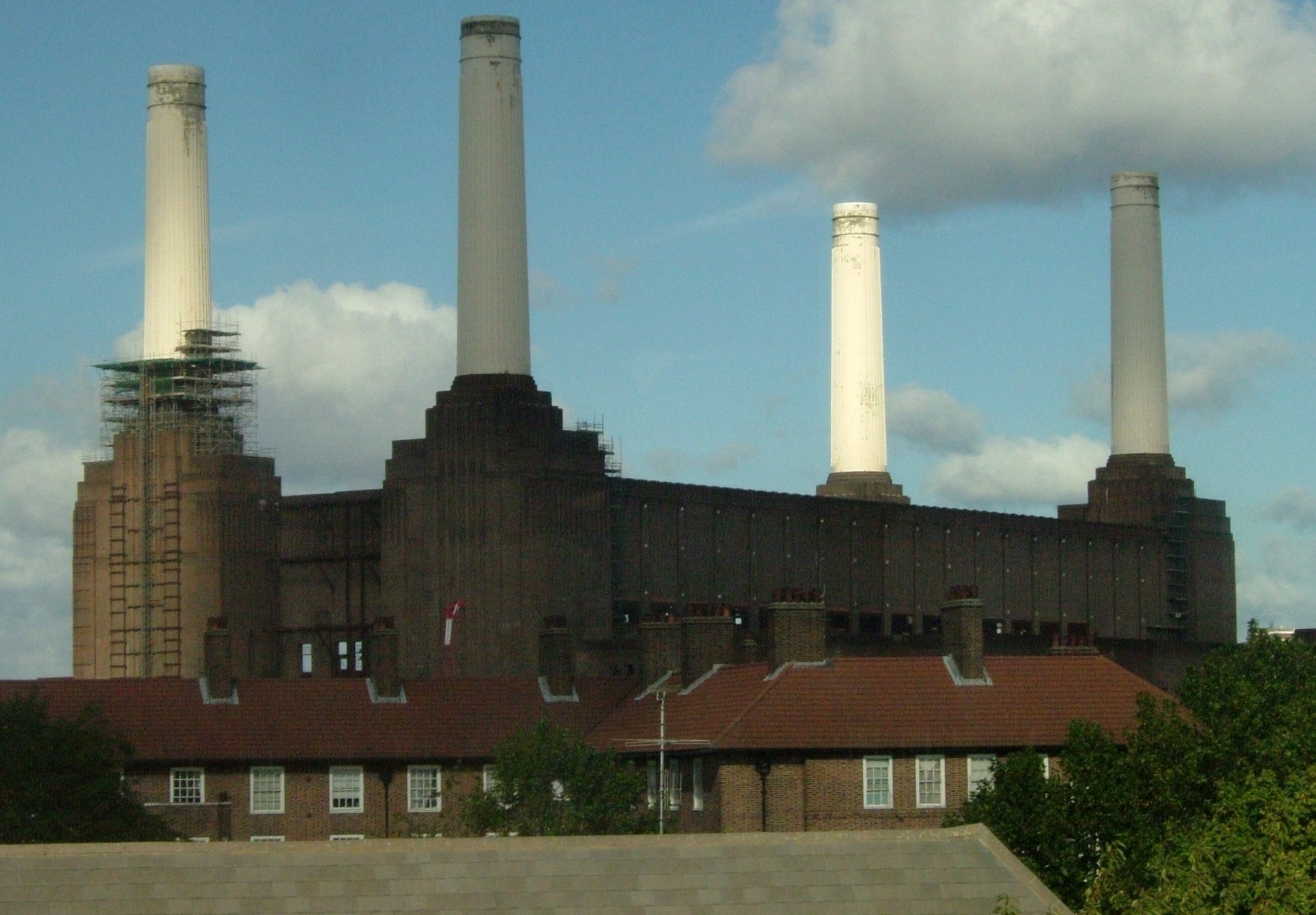
There's an article in today's Kennington news journal about the proposed tube extension to Battersea, which would apparently be paid for by some developers who want to put a vile building next to the lovely (but somewhat derelict) power station.

Here is a picture of the lovely Battersea power station, taken from Wikipedia:


Here is a picture of the vile building (with the power station to the right) that some people want to place in Battersea:


Now, as a self-confessed public transport geek, it would be grand to see a development of the Northern Line from Battersea to Kennington, but I want to raise a few issues that I think may be shared by other Londoners:

1. The wonderful development of a new tube station at Battersea, funded through private finance, is a waste of money when one considers that the tube could be extended much furthur than just one stop. Once one has begun digging underground, and arranged labour, material, machinery and civil engineers, one might as well go a lot furthur south. If TFL could get government money for tube expansion (or even tram lines), we wouldn't have to be so grateful to private finance for such suggestions as new bits of tube.

2. Extending the tube by one segment of line and one station just does not justify the monstrous building that has been suggested. I'm actually in favour of new housing/buildings in London, but I have one condition for all buildings. Buildings should not be considerably higher than those already surrounding them. SE11 has got off lightly because of the historic nature of its buildings, but poor Elephant and Castle is about to be dwarfed. So if you want the rocket monstrosity meant for Battersea, put it in Canary Wharf, not Battersea. I do not object to new housing, but I don't understand why new housing has to be very tall skyscrapers. Such skyscrapers are simply not designed to promote community or shared life, and I think that they're a really bad idea.

3. If the height of the building were not bad enough, there is the beautiful power station to consider. Would anybody really contemplate building the rocket next to Buckingham Palace, or Big Ben? No. Of course not. But because this is South London, and the area is in need of regeneration, it's considered that anything goes...

I really am in favour of the tube station at Battersea, (although I have no idea how long it might shut Kennington tube and/or the Northern line for) and in favour of regeneration (if it can be proven to benefit the disenfranchised of Battersa), but that building is too large a price to pay.

And finally... I discovered a really great little map, posted by somebody on the Urban75 forum, which shows all of the proposed transport links in London by 2016 if, by some miracle all of the funding were secured. The proposed Cross River Tram line is in a groovy purple colour.

Wednesday, 2 July 2008

Croydon Tram? Cross River Tram?

Some interesting news just in from The Mayor Watch blog on the fact that TFL are buying out Tramtrack Croydon. I wonder if this is potentially a piece of joined up strategising by the mayor. It would eventually fit well with my pipe dream of linking up Croydon with the Cross River Tram and giving south London an alternative transport infrastructure. All that is required is a "yes" to go ahead with (at least) the southern section of the Cross River Tram. On the other hand, it may be that the Croydon Tram buyout has nothing to do with an overall plan, and is just "one of those things".

Ed: Unfortunately, the comment left in the comments section by James appears to reflect that the purchase of the Croydon tram by TFL was one of the last moves of the mayoral regime of Ken Livingstone, and consequently does not imply anything about Boris' commitment to tram policy in South London. So, back to waiting for furthur news...

Thursday, 26 June 2008

Cross River Tram

We seem to have heard very little of the Cross River Tram since Ken Livingstone's departure. It has come up at several Mayoral question times with Boris, but he has been rather non-commital on the matter. London Connections blog appear to think that a decision will be due in July. I'm not sure where that information has come from. We've had consultations that have been going on for aaaages. Lots of talk about whether the depot might be in Peckham or the Old Kent Road. Endless route discussions about which roads should be taken in Kennington, Brixton, Peckham, Camberwell, Elephant, Waterloo etc. And yet, we've still no tram, no tram tracks, no happy people travelling around south London marvelling at the environmental goodness of no longer needing cars...

The tram isn't particularly set to benefit the SE11 area. It will run through Kennington if its built, but Kennington and Oval are already well connected by virtue of their tube stations, the walkable Vauxhall or E&C overground / tube stations, and lots of buses. What it would do in actuality, would be to open up South London. Everybody knows that regeneration is not possible without good transport infrastructure. In the meantime, regeneration has just come to mean making the Elephant and Castle Shopping Centre derelict without giving its tenants any new options or building lots of buy-to-let properties (not always accessible for locals) in Peckham, on vague promises of a "yet to arrive tram" and then not delivering. (The cynic in me thinks that regeneration is just a glossy word for "removal of existing people who are not considered capable of generating capital and therefore are not assets"). But I do love South London, and I think everybody who lives south of the Thames should have the opportunities available to the rest of London. And those opportunities are made possible because it's possible for people to travel in and out of their London disticts. If Boris is serious about cutting knife crime, he'll back the tram and ensure that funding is forthcoming. If he is not serious about knife crime, he will just do a lot of fund-raising for local youth that will benefit this generation and he'll put lots of police people on the streets. And then the next incumbant mayor will arrive and decide to scrap those projects. At least if the tram is built, it would leave a very tangible legacy, accessible for all.

I have hopeful dreams that the already existing Croydon tram could be connected to the Brixton or Peckham branch of the Cross River Tram. But maybe it's because I'm a secret public transport geek. I like travelling on buses on the top deck in the window seat. And I like zooming along on the (only just affordable) tube to arrive somewhere different when emerging from underground. And I like the Thameslink line that will drop you from London to Brighton. And I also like cycling because it's free and good for you.

And anyway, how come they managed to get funding for the Cross Rail Project? It's not fair. *enters foot-stomping mode* You know, the Three Wheeled Pleb doesn't even care if the Cross River Tram doesn't cross the River. But please please, just get it built. Only, umm, preferably not in time for the Olympics :) :)

Label Cloud